
When Your Air Conditioning Becomes Your Best Friend in the Emirates
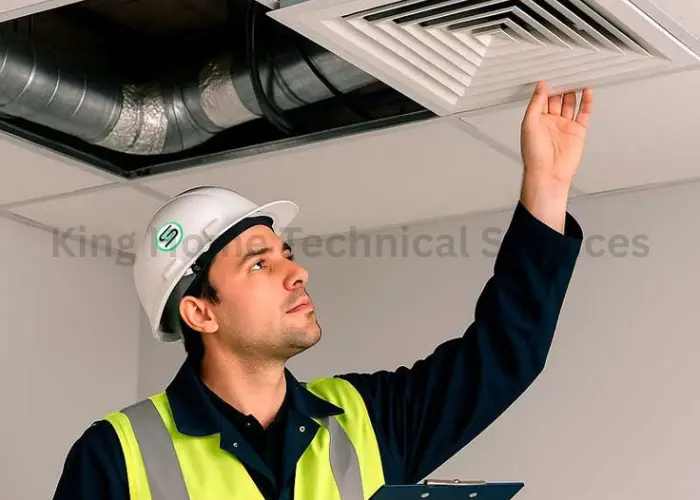
Imagine this: It’s the middle of July in Dubai. The weather outside is at or above 48degC and you’re stepping into your cool and comfortable home after a long and tiring day. The refreshing blast of maintained air isn’t just an indulgence, it’s vital to living comfortably throughout the UAE. After providing families throughout the seven Emirates for more than 10 years and counting, we here at King Home Technical Services have witnessed firsthand how a good heating and cooling system could transform your home from being living to truly comfortable, even in the toughest summer seasons.
Being a resident of the UAE means that your HVAC system isn’t just a gadget, but the core of your home’s comfort. If you’re living in a chic Downtown Dubai apartment, a sprawling Abu Dhabi villa, or a compound for your family located in Sharjah the HVAC, heating or air conditioning system performs better here than nearly everywhere else. The distinctive combination of extreme temperatures, high humidity in certain months, and the sand-filled air causes problems that require specialist skills and equipment.
What we’ve learned during our time providing services to UAE homeowners: the difference between a well-designed HVAC installation and basic installation could mean the distinction between luxury and annoyance in addition to hundreds of dirhams per month in electric bills. Let me guide you through all you need to know concerning HVAC equipment in the Emirates starting with choosing the most appropriate system for your home, to keep it running at peak efficiency all year round.
Understanding HVAC Systems in the UAE Context
The Evolution of Climate Control Across the Emirates
In the time that the UAE was making its mark as a modern country the air conditioning system wasn’t just about comfort, it was about making progress possible. The transition from wind towers that were once used for courtyard cooling to the modern HVAC systems is a reflection of the nation’s remarkable development. What began as simple windows in the 70s has grown into sophisticated, efficient systems that are able to maintain perfect indoor temperatures while also supporting the UAE’s sustainable goals as outlined as part of Vision 2071.
Today’s UAE homeowner has particular challenges that don’t occur in climates with temperate temperatures. Our HVAC systems have to deal with outdoor temperatures that frequently surpass 45 degrees Celsius and humidity levels that may rise during certain seasons and the constant struggle for fine dust which seems to sneak their way into every aspect of our lives. That’s why knowing about the HVAC system isn’t only useful, it’s crucial to protect your investment and guarantee the comfort of your family.
Why HVAC Performance Matters Specifically to UAE Residents
In the climate of our region, your HVAC system is typically in operation during 10-12 months of the year as opposed to maybe six months in cooler areas. This is a significant issue for UAE homeowners that the HVAC system wears out more and needs more regular maintenance. Furthermore, any failure in your system will result in substantial cost–we’ve witnessed monthly DEWA costs run in the range of AED 200 for systems that are efficient up to AED 2,000 for systems that are not maintained properly or unsuitable installation.
The UAE’s building code especially that enforced through Dubai Municipality and Abu Dhabi Municipality are evolving to set greater energy efficiency standards. New construction after 2014 has to be able to meet certain thermal performance standards However, a lot of older homes are still operating with systems that weren’t built to meet the current standards of efficiency. This poses both opportunities and challenges homeowners seeking to improve or upgrade their current systems.
Debunking Common HVAC Myths in the Emirates
Let’s discuss some common misconceptions that we see often. The first is that many think that setting the thermostat to 16°C will make a room cool faster. This is actually a waste of energy and places unnecessary strain on the system. The AC isn’t working at a higher temperature; it’s just running longer to get there.
Another popular myth is the belief that closing off vents within unoccupied rooms can save energy. For duct systems, this can increase pressure, which causes your system to perform more. We’ve measured the energy consumption of houses where homeowners thought they could save money by shutting vents, only to discover that their bills have actually risen.
One of the most expensive myths is that maintenance isn’t needed even if the system appears to be operating properly. Based on our experience with UAE homeowners, systems that receive regular maintenance last between 12 and 15 years on average, whereas unmaintained systems typically fail in 6-8 years. This is a costly mistake in the harsh climate of Dubai.
Core HVAC System Types for UAE Homes
Central Air Conditioning Systems: The Gold Standard for Larger Properties
Central systems are still the top option for villas and bigger apartment buildings throughout the Emirates and with the right reason. They provide constant cooling throughout your house using the duct network that is connected to central units. Through our experience in the city of Dubai’s Emirates Hills, Abu Dhabi’s Saadiyat Island, and Sharjah’s Al Qasba area, we’ve observed that well-designed central systems can provide the best combination of efficiency, comfort, and control of air quality.
The most significant benefit in our climate is its ability to keep a constant humidity control, which is crucial during the humid months, when the outdoor humidity can be as high as 90 90%. Modern central systems that are equipped with variable-speed compressors are able to adjust their output to meet the demands of cooling, dramatically cutting energy usage in the cooler months of December to March.
To be used for UAE residences, we generally recommend systems that have SEER (Seasonal Energy Efficiency Ratio) ratings of 16 or greater. While these systems have more upfront costs, the savings on energy in our climate will typically pay back the cost in 2-3 years. We’ve seen cases when switching the 10 SEER system unit to an 18 SEER system cut monthly cooling expenses by 40-50%.
Split Systems: Flexibility for Modern UAE Living
Split systems have risen in popularity, especially in smaller homes and apartments across the Emirates. They consist of an outside compressor, which is connected by one or two indoor air handles. The ability to regulate various zones separately makes them suitable for the many living arrangements that are typical in UAE homes families, where members of the family may have different preferences in terms of comfort.
We have experience working with houses all the way from Jumeirah Beach Residence to Yas Island The split system is a winner in instances where ductwork is not practical or cost-effective. Modern inverter-driven systems for splits can alter their output in order to meet the cooling requirements, ensuring constant temperatures while using significantly less energy than conventional systems that operate on and off.
The latest generation of split systems available in the UAE market includes features specifically beneficial for our climate: advanced filtration to handle sand and dust, enhanced dehumidification capabilities, and smart controls that can be managed remotely–particularly useful for expat families who travel frequently.
Window Units and Portable Systems: When Simplicity Matters
While not the best for home cooling, window units and portable systems have their use within UAE homes. We’ve installed them successfully in cases such as the conversion of rooms that are already in use, for temporary cooling requirements, or even as backup systems for maintenance times.
The primary consideration for our climate is making sure that units are appropriately designed and installed. A window unit that is too small will continue to run without reaching pleasant temperatures, while the larger units will be able to cycle on and off frequently, and fail to regulate humidity. This is a major issue during the hot months of the United Arab Emirates.
Expert Insights and Authority Perspectives
Professional Recommendations by UAE HVAC Experts
“After twenty years of installing and maintaining HVAC systems across the Emirates, I can tell you that the biggest mistake homeowners make is treating their system as a ‘set it and forget it’ appliance,” explains Ahmed Al-Rashid, Senior Technical Manager at King Home Technical Services. “In our climate, your HVAC system is working as hard as any system in the world. Regular maintenance isn’t optional–it’s essential for both performance and longevity.”
According to information from The Emirates Authority for Standardization and Metrology According to data from the Emirates Authority for Standardization and Metrology, well-maintained HVAC systems in the UAE consume between 20 and 30 percent less energy than those that are neglected. Dr. Sarah Mitchell, who has conducted extensive research into building efficiency and energy use within the American University of Sharjah, states it is “the combination of extreme temperatures and high operating hours means that even small inefficiencies compound quickly into significant costs and comfort issues.”
Dubai Electricity and Water Authority’s latest study of the consumption of energy by residential homes revealed that cooling is the most common reason for 70-80% of electrical consumption in UAE homes during peak seasons. This is a reason why choosing and maintaining the best HVAC system isn’t only about comfort. It’s about managing your biggest monthly cost after your housing.
Regional Statistics and Performance Data
Recent figures provided by data from the UAE Ministry of Energy and Infrastructure indicates that cooling demands have increased by 35% in the last 10 years due to population growth and increasing expectations for comfort. However, the energy consumed by cooling systems has actually dropped by 18% as a result of the advancement of technology and higher efficiency standards.
The statistics taken from the Federal Competitiveness and Statistics Centre show that UAE homeowners who use high-efficiency HVAC systems can save an average of AED 1,200-2,400 a year when compared with standard HVAC systems. If multiplied over the period of 12-15 years that’s a significant savings that can be more than the initial investment into premium equipment.
Real-World UAE Case Studies
Case Study 1: Villa Transformation in Dubai’s Arabian Ranches
This year, we collaborated on behalf of The Johnson family. British residents who’d experienced issues with their cooling as well as monthly DEWA costs that exceeded AED 1,800 in the summer months. The five-bedroom house they lived in was fitted with an old central system that was not properly maintained since the installation.
Our inspection revealed a variety of issues that included ductwork that was not sized correctly inside the master and a failing compressor that was drawing up excessive energy as well as air leaks which were forcing this system to operate harder. The family was extremely dissatisfied with the inability to keep their temperatures at a comfortable level in their bedrooms for their children in the summer heat.
We created a full-service solution that includes a high-efficiency central system that has variable-speed technology, appropriately designed ductwork throughout the house as well as enhanced zoning controls. The installation took about four days and was meticulously timed for the colder months to minimize disruption.
Results after a single year After one year, the family’s average monthly cooling expenses fell to AED 980 which is a reduction of 45. Additionally, they enjoyed constant comfort throughout the house and the temperature differences between rooms reduced from 4-5degC to less than 1 degree Celsius. The advanced humidity control system also alleviated the discomfort they felt in some areas of the house.
Case Study 2: High-Rise Apartment Optimization in Abu Dhabi’s Corniche
Doctor. Rahman, a local physician who lives in a 32nd-floor apartment that overlooks the Corniche we contacted us regarding inadequate cooling performance and a concern about the cost of energy. Even with relatively recent air conditioning systems that were split, his three-bedroom home could not maintain the right temperature especially in the living spaces that were facing towards the west.
Our review revealed that while the equipment was in good condition, the installation had some serious issues. These included improper refrigerant charge, improperly installed indoor units, as well as outdoor units which were suffering intense afternoon sun exposure, without sufficient shading.
The solution was to relocate outdoor units into an area shaded, correctly charge the refrigeration system and supplying additional cooling for the living areas facing west. We also added intelligent controls that alter the settings according to the sun’s exposure as well as occupancy.
Results: Results: Dr. Rahman’s monthly electric bill dropped by 30 percent, but more importantly, his house is now comfortable even during the hot summer afternoons. The intelligent controls have proved to be particularly useful by automatically adjusting the system while he’s away at his regular medical meetings.
Case Study 3: Traditional Family Compound in Sharjah
The Al-Mansouri family came to us with concerns about cooling their traditional family compound which houses three generations. The current combination of window units and older split systems resulted in unbalanced temperature, and high cost and frequent maintenance problems.
With the constraints of the traditional architectural system We developed an integrated solution that blends high-efficiency split systems designed for families with smaller central systems to share common spaces. The design was designed to respect the privacy of the family while making sure that the system was efficient in operation.
Results of implementation The family was able to achieve a 40% savings in overall cooling costs while significantly improving the comfort of all living areas. The latest systems’ sophisticated filtering also addresses dust issues that were difficult with older units. In addition, the dependable operation has almost eliminated frequent calls to service that had been disruptive to family life.
Practical Implementation Guide for UAE Homeowners
Planning Your HVAC System Considering UAE Regulations
Before taking any HVAC decision, UAE homeowners must consider various regulatory requirements. Dubai Municipality requires building permits for large HVAC installations, especially those that involve structural changes or modifications to the building’s services. Abu Dhabi Municipality also has the same requirements but with an additional importance on energy efficiency compliance for buildings that are newer.
The first step of every HVAC project must be the proper load calculation. For our environment, it is more than just a simple calculation of square footage. We need to consider sunlight exposure, window types along with insulation levels as well as the specific requirements of the area you are in. A house in Dubai’s inland areas has different difficulties than a coastal home in Fujairah and your plan must be designed accordingly.
If you live in a home built prior to 2010, you should consider having your electrical system assessed prior to making changes to HVAC equipment. Modern high-efficiency systems usually require dedicated circuits, and can outpace the capabilities of older electrical systems. This is especially important in the older regions of Dubai as well as Abu Dhabi where electrical infrastructure might not have been specifically developed to meet today’s demands for cooling.
Selecting Equipment and Materials for Emirates Conditions
When selecting HVAC equipment to meet UAE conditions, look for systems that are specifically created for extreme weather conditions. Choose outdoor units that have an enhanced corrosion resistance. The mixture of the salty air (particularly close to the coast) and sand creates difficult conditions for metal parts. Equipment equipped with gold-fin coils and marine-grade coatings generally last for 30-40 percent longer in the environment we live in.
The importance of filtering is in the UAE because of the constant presence of dust and fine sand. The filters that are effective in other climates can quickly get blocked and useless here. We suggest systems that use pleated filters with high efficiency or, for those that have allergies, HEPA-grade filters.
Be aware of the requirements for maintenance when choosing equipment. Systems with access panels that do not require tools and self-diagnostic functions reduce maintenance costs as well as the number of calls to service. According to our experience, homeowners who are able to perform simple maintenance tasks such as filter replacement and cleaning of coils achieve higher system performance and lower long-term expenses.
Budget Considerations and Cost-Benefit Analysis for UAE Market
HVAC investment in the UAE needs careful planning of finances however the rewards could be significant. If you are planning to install a typical home HVAC system you can expect to pay between AED 4,500 for an entry-level unit to AED 120,000 for a premium system equipped with modern features. While these figures may seem important, think about the fact your HVAC system will run for more than every other appliance you have inside your home.
When you are evaluating your costs, be sure to factor into the pricing structure of electricity in the UAE’s structure. DEWA and ADEWA utilize tiered pricing. This means that energy efficient systems don’t only conserve money but can also maintain you on lower cost levels, thereby increasing the savings. We’ve witnessed instances where energy-efficient systems didn’t just pay for themselves by saving energy but also reduced the total cost of operating a home.
There are a variety of financing options readily available to UAE home owners, as there are many lenders offering eco-friendly loans to fund energy-efficient home improvement. Certain utility companies also offer rebates for high-efficiency construction however these programs are subject to change regularly. You should research the current incentives prior to making plans for your project.
Timeline Expectations and Local Considerations
HVAC construction projects within the UAE require a strategic timetable. The most suitable time for installation is generally between the months of October and March, when temperatures outside are lower for homeowners and those who do not have air cooling. Installations in summer are feasible, but they need careful planning and could result in more expense due to difficult working conditions.
For large installations, you should plan for 3-7 days based on the complexity of your system. Dubai Municipality typically processes permits within 5-10 working days however this may be extended during peak times or when projects are complex. Abu Dhabi and other Emirates have similar timeframes, but requirements could differ slightly between the jurisdictions.
Be aware of the UAE’s holiday calendar when designing projects. The work schedule typically ceases at Ramadan and daylight hours but major holidays such as Eid may extend project durations. Be prepared, especially for projects that result in you being temporarily without air cooling.
UAE Compliance and Regulatory Requirements
as safety standards. The Emirates Authority for Standardisation and Metrology (ESMA) has specific rules for electrical safety and certification of equipment. Be sure that the equipment you buy has the correct UAE certification labels.
The handling of refrigerants requires certified technicians within the UAE. Environmental regulations are becoming more strict and impose heavy penalties for improper disposal of refrigerant or leaks. Always use licensed contractors who can manage these regulations and have the proper documentation.
For commercial or large residential structures Energy efficiency reports may be required. Dubai’s Green Building Regulations and Abu Dhabi’s Estidama program have particular HVAC efficiency requirements that have to be recorded and maintained.
Future Outlook and Sustainable HVAC Solutions
Smart Home Integration and UAE Vision 2071 Alignment
The UAE’s commitment to sustainability, as outlined within Vision 2071, is driving the development of innovative technology for residential HVAC. The integration of smart homes is not only practical, it’s essential to achieving the goals of energy efficiency which will define the Emirates in the future. Modern HVAC systems can now be integrated with home automation software that can learn the patterns of your family and automatically adjust their operation.
We’re seeing a growing demand for systems that are able to communicate with the grid, thereby cutting the consumption of electricity during high demand times to lower electricity prices. DeWA’s Smart Grid initiatives are likely to enhance these opportunities which will make smart HVAC systems not only ecologically sustainable, but also financially beneficial.
The integration of renewable energy sources, specifically solar power along with HVAC systems is becoming more feasible across the UAE. Solar-powered cooling systems are able to significantly reduce the use of grid electricity as well as government incentives keep making these installations more appealing to homeowners.
Emerging Technologies in Emirates Climate Control
Technology for heat pumps, previously not as effective in harsh temperatures, is advancing to be efficient even when operating in UAE conditions. The most recent technology of the heat pump is effective in temperatures outside of 50 degrees Celsius which could provide heating and cooling (for the short time they are needed) with astonishing effectiveness.
Variable refrigerant flow (VRF) systems are increasing in popularity in large UAE homes. They can simultaneously cool and heat different areas, transferring the heat from areas in need of cooling and transferring it to warm areas that require heating. While heating is not a major requirement in the UAE however, the efficiency of this technology in cooling makes it appealing for larger buildings.
Magnetic bearing compressors are a different technological advancement. These compressors contain fewer moving components and operate with less noise and have greater efficiency than conventional compressors. The first installations in UAE have seen promising results, even though the technology isn’t cheap.
Your Comfort, Our Expertise
Being comfortable in the UAE isn’t only about being able to cool your home down, it’s about having the correct air conditioning system that is properly fitted and regularly maintained. Over the past decade of servicing families across the seven Emirates we’ve discovered that every house is unique, each family has their own requirements, and each installation requires a specialist who understands the latest technology as well as the local environment.
The decision you make to invest in your HVAC system today will have an impact on the quality of your life and also cost you over the future 12-15 years. If you’re building a brand new house, updating your existing system, or just trying to improve the efficiency of your existing setup, the key is to work with experts who know the specific requirements of our climate. They also have the expertise to create solutions that will work every year.
We are King Home Technical Services, we’ve earned our reputation by treating each and every project as if it was our home. From initial consultations to regular maintenance, we’re dedicated to keeping your family comfortably and comfortable while managing your energy bills efficiently. Our service areas include the entirety of Emirates including the modern condominiums in Dubai Marina to the traditional villas in Al Ain, and everywhere between.
Don’t let another scorching summer catch you out of the loop. Call us now to get a thorough assessment of the cooling requirements for your home. We’ll assist you in understanding the options available, make plans for your investment and make sure that your family is at peace no matter what UAE weather does.

